Collaborative robots
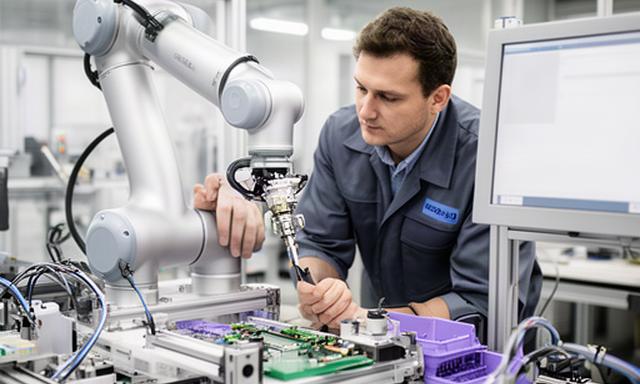
Cobots handle repetitive loading, assembly and inspection beside trained staff. UK adoption is strongest where changeovers are frequent.
Read cobot coverageRobotics & Smart Manufacturing
UK robotics innovation is moving from pilot cells into everyday production. Learn how industrial automation, connected machines and digital twins can improve output without losing sight of people or process.
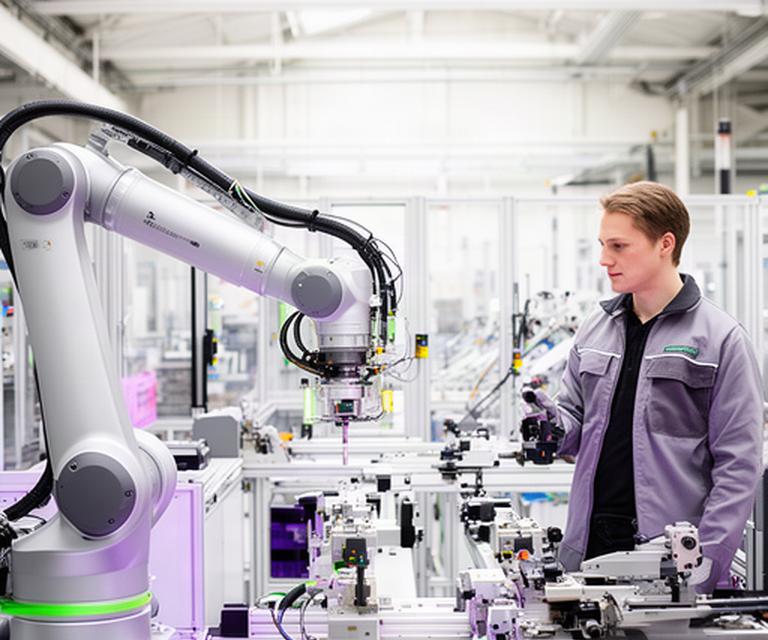
The production signal
Connect the machine, the team and the decision.
Technology overview
The right starting point depends on the bottleneck. Begin with the work that costs time, creates risk or limits capacity.
Cobots handle repetitive loading, assembly and inspection beside trained staff. UK adoption is strongest where changeovers are frequent.
Read cobot coverageAMRs move components between storage and workstations, adjusting routes when people or priorities change.
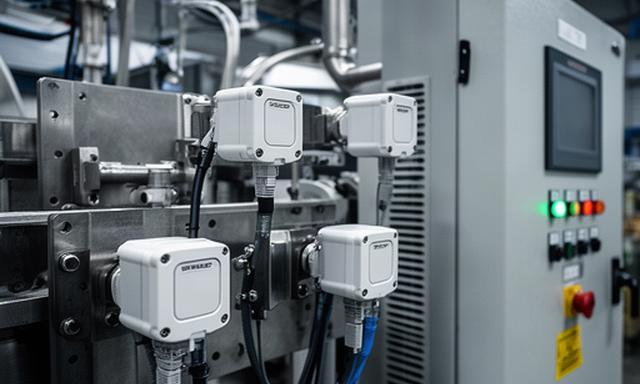
Track AMR developmentsConnected sensors expose energy use, machine health and production flow. Security belongs in the design from day one.
Explore IoT securityA live model of a line or supply chain tests changes before they reach the plant. ROI becomes clearer when the decision is specific.
See twin applicationsMachine vision spots defects consistently and gives operators a clearer view of recurring causes.
Read about manufacturing AIPractical evidence
Small production decisions add up. These examples show what changed on the shop floor and how teams measured the result.
Automotive parts
A press-shop team used cobots for component loading and moved operators towards tooling checks and first-off approval.
"The robot took the strain out of a task people had stopped questioning." — Remploy G.
Food processing
Vision inspection and connected scales helped a chilled-food plant spot drift before a full batch needed review.
"The useful change was earlier visibility, before the issue reached the end of the line." — Corren T.
Electronics assembly
An assembly site paired machine data with a digital twin to test buffer sizes and reduce waiting between stations.
"We could test the change in the model before touching a live order." — Sindujan L.
Implementation guide
Automation works when the operating detail is honest. Set the baseline, involve the people closest to the task and make security part of the plan.
Review funding and supportStart with one measurable constraint, such as changeover time or inspection backlog. Use a staged business case that separates equipment, integration and training.
Pair operators with automation engineers during the pilot. Document safe recovery steps and give the team ownership of the new standard work.
Map the signals already available before replacing hardware. A gateway, clear naming convention and one trusted data source can be enough for a first use case.
Segment operational networks, control remote access and maintain an asset register. Test the recovery plan before connecting more devices.
Check current Made Smarter guidance, regional growth support and sector-specific funding before fixing the project scope.
Supply-chain insight
A digital twin can test a supplier delay, a transport bottleneck or a sudden order change before the disruption reaches production. The useful output is a decision: hold stock, change sequence or qualify another route.
Resilience
See weak points earlier.
Cost control
Test inventory choices.
Lower waste
Compare routes and loads.
News and resources
Short briefings for people making investment and operating decisions.

Smart factories · 5 min read
Get a focused note on UK robotics innovation and industrial automation.